
Silverado Trail Boss Off-Road Features and Capability
The Silverado Trail Boss off-road capability is a real hardware story, not a graphics package. At Barry’s Chevrolet in West Union, Ohio, Trail Boss trucks sell to buyers who actually use them off-road: hunters running gravel back roads into Wayne National Forest, farmers navigating steep access lanes in Adams County, and contractors who need a truck that handles whatever surface a job site puts under it. This post covers exactly what the Trail Boss hardware is, how it performs in the kind of terrain buyers in Southern Ohio actually encounter, and how to decide between the two Trail Boss trims.
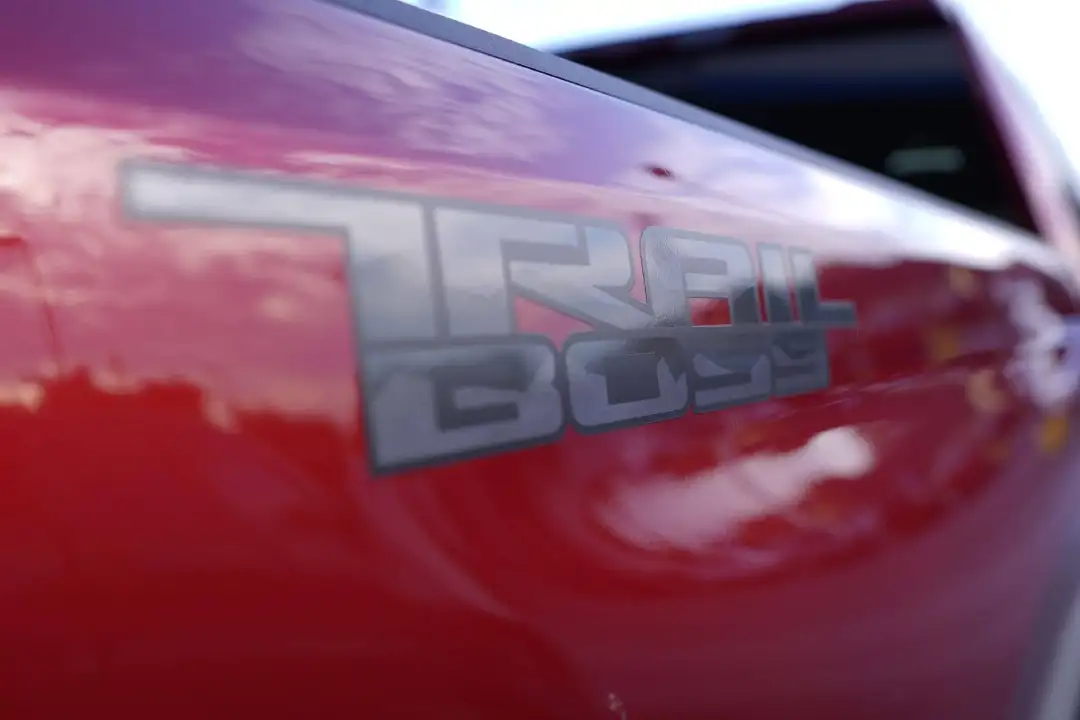
What Does Trail Boss Mean on a Silverado?
The Trail Boss is not a visual package or a trim level that looks capable without being capable. It is a Silverado 1500 that has been lifted and equipped with a specific set of off-road components as standard equipment. Every Trail Boss comes with the Z71 off-road package from the factory. You cannot buy a Trail Boss without it.
The Trail Boss name goes back to the early Silverado era. Chevrolet brought it back for the current generation as a purpose-built off-road half-ton. The Silverado Trail Boss is available in two configurations: the Custom Trail Boss and the LT Trail Boss. Both get the same off-road hardware. The difference is the interior trim level.
The Z71 Off-Road Package: What Is Actually On the Truck
Every Silverado Trail Boss includes the Z71 off-road package as standard. Here is what that means in hardware terms:
- 2-inch factory suspension lift: the entire suspension geometry is raised 2 inches over the standard Silverado 1500 ride height. This is not a body lift. It is a proper suspension lift that changes the approach angle, ground clearance, and departure angle of the truck.
- Rancho monotube shocks: Rancho is a purpose-built off-road shock brand. The monotube design handles heat better than a standard twin-tube shock under sustained off-road use, which matters when you are bouncing through a rocky access road for a mile rather than hitting a single bump on a paved road.
- 33-inch Goodyear Wrangler Territory all-terrain tires: a purpose-built all-terrain tire with an aggressive tread pattern designed to provide traction in mud, gravel, and loose terrain without sacrificing highway manners. 33 inches is a meaningful tire diameter for a half-ton.
- Autotrac active transfer case: engages 4WD automatically when the system detects front-wheel slip rather than requiring the driver to manually engage 4WD mode. In practice, this means the truck is managing traction continuously rather than waiting for the driver to react.
- Locking rear differential: the most significant piece of hardware for actual off-road use. When engaged, the rear axle locks both rear wheels to spin at the same speed regardless of traction differences between them. If one rear wheel is in the air or on ice, the other wheel keeps driving. This is what separates a capable off-road truck from one that just looks the part.
- Front and rear skid plates: steel plates protecting the oil pan, front differential, and transfer case from rock strikes. On Southern Ohio gravel roads, skid plates are genuine protection rather than a cosmetic addition.
- Hill Descent Control: maintains a controlled, constant speed on steep downhill grades without the driver having to modulate the brakes. Useful on the kind of steep, loose-surface descents common on hunting land access roads in Adams County.
- Rock crawl camera: an underbody camera system that shows a live view of what is happening beneath the front of the truck, useful for technical terrain where wheel placement matters.
For the full breakdown of what the Z71 package means across the Silverado lineup, see our Silverado Z71 page.
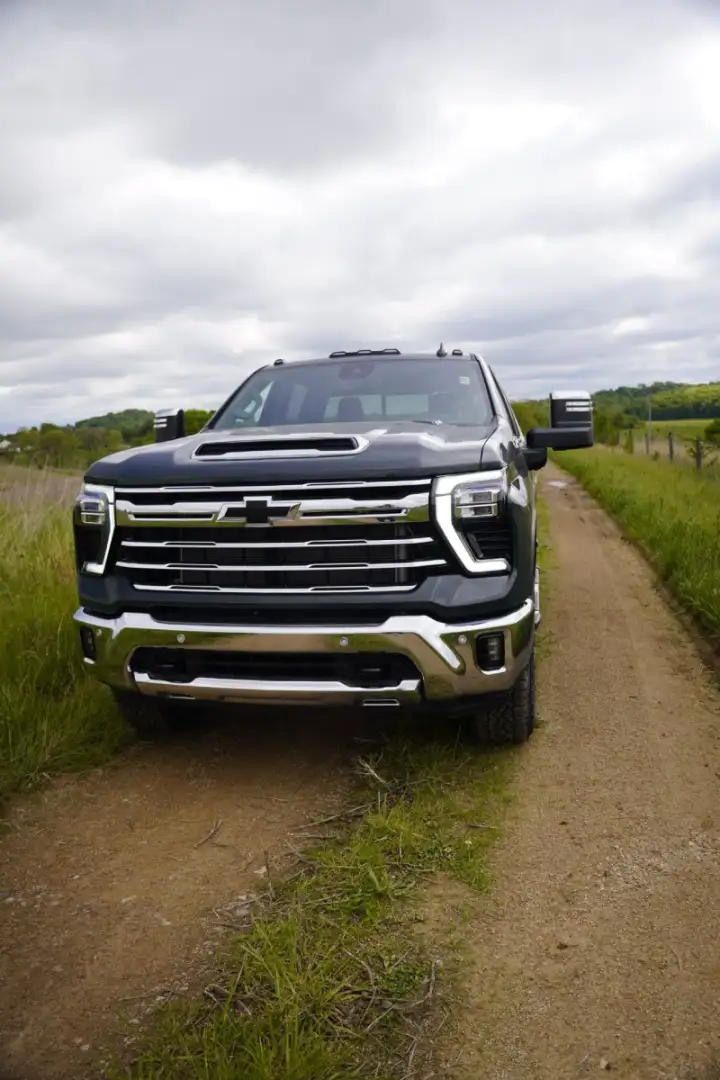
Custom Trail Boss vs LT Trail Boss: Which One
This is where most Trail Boss buyers need to make a decision. Both trucks have identical off-road hardware. The Z71 lift, the Rancho shocks, the lockers, the skid plates: all of it is the same on both. The difference is entirely in the cab.
Custom Trail Boss
The Custom Trail Boss is built on the Custom trim level. That means an 8-inch touchscreen, cloth seating, no heated seats, and a more utilitarian interior. If you are buying the Trail Boss as a dedicated work and off-road tool and you spend more time in the field than on the highway, the Custom Trail Boss delivers the full Z71 capability at a lower price point with an interior that handles mud and abuse without complaint.
LT Trail Boss
The LT Trail Boss steps the interior up to the LT level: the 13.4-inch diagonal touchscreen, heated front seats, wireless Apple CarPlay and Android Auto, and wireless phone charging. For buyers who drive the Trail Boss as their primary daily vehicle: commuting on Route 32, taking the family somewhere on weekends, hauling gear to the hunting lease and back: the LT Trail Boss is the version that handles both sides of that without feeling like a compromise.
For most buyers who use the Trail Boss as a regular-use vehicle, not just a dedicated off-road rig, the LT Trail Boss is the one that makes sense. The heated seats and the bigger screen are noticeable every day. The off-road hardware is the same regardless.
What the Trail Boss Actually Does in Southern Ohio Terrain
The terrain in Adams County and across Southern Ohio is exactly the kind of environment the Trail Boss was built for. Steep gravel roads off Route 41 and throughout the county require a truck that can manage loose surface traction on grades. Farm access lanes across the Appalachian foothills put the suspension through real articulation demands. Hunting land in Wayne National Forest involves a mix of rocky trails, soft soil after rain, and creek crossings that a standard road truck handles poorly.
Here is how the specific Trail Boss hardware maps to Southern Ohio use:
- The locking rear differential on creek banks and soft soil after rain: this is where buyers notice the hardware first. A standard 4WD truck with an open differential can spin one rear wheel while the other does nothing. The Trail Boss’s locker ensures both rear wheels push together.
- Rancho shocks on gravel county roads: sustained gravel road driving generates heat in shock absorbers through repeated small impacts. The Rancho monotube units dissipate that heat more effectively than standard twin-tube shocks, which is why the Trail Boss handles a long gravel drive at the end of the day better than a standard truck that has been doing the same work.
- The 2-inch lift on farm access lanes with ruts: higher ground clearance means the truck does not drag its undercarriage on ruts and high-center obstacles. The skid plates back that up for the moments when contact does happen.
- Hill Descent Control on steep wooded grades: hunting land in Southern Ohio often involves getting a truck into a hollow and back out. On a wet fall morning, the descent is where traction disappears. Hill Descent Control removes the driver from that equation.
View this post on Instagram
The Towing Tradeoff: What You Need to Know
The 2-inch suspension lift that makes the Trail Boss capable off-road also reduces its conventional towing capacity compared to a non-lifted Silverado with the same engine. A standard Silverado 1500 with the 2.7L TurboMax tows up to 9,500 lbs. The Trail Boss with the same engine is rated for approximately 7,200 lbs.
This is not a flaw in the design. It is a tradeoff. The lifted suspension geometry changes the tongue weight distribution and the hitch geometry in ways that affect the certified towing rating. If you regularly tow loads above 7,000 lbs, the Trail Boss configuration requires more thought. If your towing needs stay below that and your off-road use is the priority, the Trail Boss covers both.
For the full towing breakdown by configuration, see our Silverado 1500 towing capacity guide.
Trail Boss vs ZR2: When to Consider the Upgrade
The Silverado ZR2 is the off-road flagship of the Silverado 1500 lineup and a different level of hardware compared to the Trail Boss. Where the Trail Boss uses Rancho shocks, the ZR2 uses Multimatic DSSV spool-valve dampers. Where the Trail Boss has a locking rear differential, the ZR2 has both front and rear electronic locking differentials. The ZR2 also has a wider track, rock sliders, mud-terrain tires, and the 6.2L V8 as standard.
For buyers who drive Southern Ohio gravel roads and farm lanes, the Trail Boss is more than adequate. For buyers who push into technical rock and trail situations where front-wheel traction matters as much as rear-wheel traction, the front locker on the ZR2 changes the capability picture significantly.
The ZR2 also comes at a meaningfully higher price than the Trail Boss. Most buyers in Adams County who want genuine off-road capability without the ZR2 premium are well-served by the Trail Boss.
Pro Tips
Engage the rear locker before you need it, not after.
The locking rear differential is most effective when engaged before you are already stuck or spinning. If you know you are about to cross something slick or steep, engage 4-Low and lock the rear differential before the front tires start breaking traction. Doing it after you are already in a bad spot is harder on the driveline and less effective.
Use Hill Descent Control on the way in, not just the way out.
Most drivers think of Hill Descent Control for going downhill. It is equally useful going uphill in technical terrain where you need controlled, consistent speed. On steep approaches with loose surface, a controlled, moderate speed is better than momentum-based charging.
Check tire pressure before extended off-road use.
The 33-inch Goodyear Wrangler Territory tires on the Trail Boss are designed to work across a range of pressures. For extended soft-surface use, reducing tire pressure slightly improves traction by widening the contact patch. For highway driving, maintain the manufacturer’s recommended pressure. Running at highway pressure on rock and gravel is harder on the sidewalls.
Additional Questions
Does the Trail Boss come with 4WD as standard?
Yes. The Trail Boss is only available in 4WD. It includes the Autotrac active transfer case as standard equipment. There is no 2WD Trail Boss option.
What engine does the Trail Boss come with?
The Trail Boss comes standard with the 2.7L TurboMax 4-cylinder engine. The TurboMax produces 310 horsepower and 430 lb-ft of torque and handles the Trail Boss’s towing and off-road demands well. The 5.3L V8 and 6.2L V8 are not available on the Trail Boss: those engines are exclusive to non-lifted trims on the 1500, starting at the LT for the 5.3L and the LTZ for the 6.2L.
When did Chevrolet bring back the Trail Boss name?
Chevrolet reintroduced the Trail Boss name for the 2019 model year with the launch of the current T1XX generation Silverado 1500. The Trail Boss nameplate originally appeared on earlier Silverado and C/K truck generations in the late 1980s and 1990s and has history in the Chevrolet truck lineup.
Talk to Barry’s About the Trail Boss
Barry’s Chevrolet is a family-owned dealership in West Union, Ohio. We carry new 2025 and 2026 Silverado Trail Boss trucks and used Trail Boss examples from the current generation. If you are deciding between the Custom Trail Boss and LT Trail Boss, or comparing the Trail Boss against the ZR2, come in and we will walk through it based on how you actually plan to use the truck. See the full Silverado 1500 lineup at Barry’s and our Silverado trim levels guide for the complete picture.
Talk to Barry’s Chevrolet
Give us a call at (866) 601-5443 or visit us on the lot in West Union, OH. We are happy to answer questions and help you find the right fit.

0 comment(s) so far on Silverado Trail Boss Off-Road Features and Capability