

Silverado 3.0L Duramax Diesel: Is the Upgrade Worth It

The Silverado 3.0L Duramax is the diesel option in the Silverado 1500 half-ton lineup, and buyers at Barry’s Chevrolet in West Union, Ohio ask about it regularly. The questions are usually the same: is it reliable, what kind of mileage does it actually get, and is the premium over the gas engine worth it for how I drive. This post gives you the straight answer on all three, including who the diesel genuinely makes sense for and who is better served by the V8.
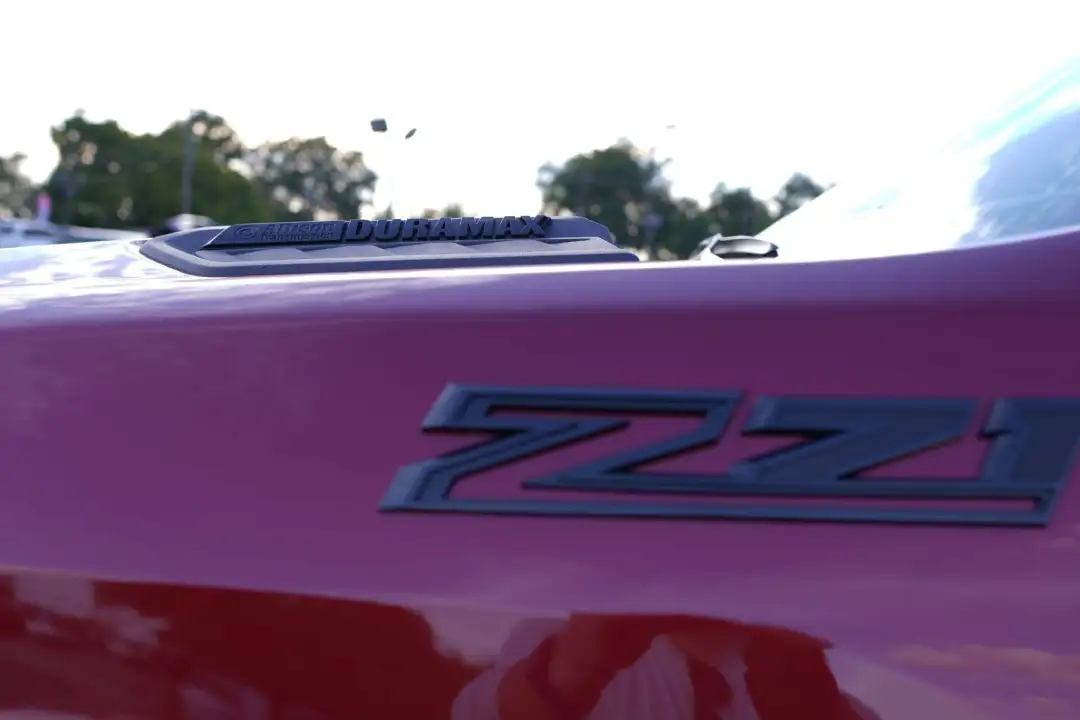
What the 3.0L Duramax Actually Is
The 3.0L Duramax is an inline-6 turbocharged diesel engine developed by GM and installed in the Silverado 1500 and Sierra 1500. It produces 305 horsepower and 495 lb-ft of torque. That torque number matters more than the horsepower in truck terms: 495 lb-ft delivered at 1,500 RPM means the diesel is producing its maximum pulling force at very low engine speeds, which is exactly where towing and hauling demand is highest.
The diesel is paired with a 10-speed Hydra-Matic automatic transmission and requires diesel exhaust fluid (DEF) for the emissions system. It was introduced to the Silverado 1500 lineup for the 2020 model year, making it a relatively recent addition compared to the V8 options that have been in the lineup for decades.
For a full comparison of all four Silverado 1500 engine options, see our Silverado engine options guide.
The Reliability Question: Honest Assessment
The reliability concern buyers bring up most often about the 3.0L Duramax centers on the 2020 first-year launch. The initial production run of the diesel Silverado 1500 had documented issues on a subset of vehicles, including head gasket concerns on some early engines. GM addressed these through technical service bulletins and updated production processes.
The 2021 and later 3.0L Duramax has a meaningfully better reliability picture than the 2020 first-year production run. Buyers shopping used diesel Silverados should specifically target 2021 and newer examples and verify service history. The 2020 is not universally problematic, but it deserves closer inspection.
For 2025 and 2026 new Silverados, the 3.0L Duramax is a production-refined engine. The launch concerns are behind it. What remains are the standard diesel ownership requirements: fuel filter changes on schedule, DEF quality management, and proper oil specification. These are maintenance disciplines, not reliability defects.
The comparison point buyers want: the 5.3L V8 has a longer documented high-mileage track record in working truck applications, simply because it has been in Silverados for much longer. The 3.0L Duramax has fewer high-mileage data points because it has only been in the 1500 since 2020. That is a reasonable concern to carry into the decision, and a fair one.
Fuel Economy: The Real-World Numbers
The 3.0L Duramax’s headline number is its fuel economy. EPA-estimated highway fuel economy for the diesel Silverado 1500 is approximately 29 mpg in 2WD configuration. The 5.3L V8 returns approximately 23 mpg highway. The 2.7L TurboMax returns approximately 24 mpg highway.
Real-world numbers from owners consistently come in close to the EPA estimate on sustained highway driving. Diesel engines run most efficiently under load at highway speed, which is the condition that most closely matches the EPA highway test. Owners who do a significant percentage of their miles on Ohio routes like US-52 and Route 32 between West Union, Portsmouth, and Chillicothe see fuel economy close to the estimate.
The diesel’s advantage shrinks in city and stop-and-go conditions. Short trips, idling, and frequent acceleration and deceleration reduce diesel fuel economy more than they reduce gas engine fuel economy. If most of your miles are local around Adams County with frequent stops, the diesel’s real-world advantage over the V8 narrows considerably.
Does the Diesel Pay for Itself?
This is the calculation most buyers want to run, and it requires knowing a few things: how many miles per year you drive, what percentage of those miles are highway, the current price difference between diesel and regular gas, and how long you plan to own the truck.
The diesel option adds a meaningful upfront cost over the comparable V8 configuration: typically in the several thousand dollar range. To recover that premium through fuel savings, you need to drive a significant number of highway miles per year over several years of ownership.
Here is a practical framework:
- Buyers who drive 20,000 or more miles per year with a high percentage of highway miles have the strongest case for the diesel’s long-term fuel savings.
- Buyers who drive 12,000 to 15,000 miles per year with a mixed city and highway pattern will take longer to recover the premium: potentially beyond their typical ownership cycle.
- Buyers who drive primarily locally and rarely cover extended highway distances will likely never recover the premium through fuel savings alone.
The diesel calculation also depends on diesel vs regular gasoline prices in your market. When diesel is priced above regular gas, the per-mile fuel savings shrink. When diesel is priced at or below regular gas, the savings improve. Ohio diesel prices relative to regular gas vary over time and are worth checking in the current market before committing to the diesel option.
Towing with the 3.0L Duramax
The diesel is rated for up to 9,500 lbs conventional towing when properly equipped. That is the same ceiling as the 2.7L TurboMax 4-cylinder in the Silverado 1500. The 5.3L V8 tows up to 11,100 lbs. The 6.2L V8 tows up to 13,300 lbs.
What the diesel offers that the towing number alone does not capture is torque delivery. Pulling a 7,000 lb livestock trailer up a grade in Adams County with 495 lb-ft of torque at 1,500 RPM is a different experience from pulling the same trailer with a gas engine that builds torque higher in the RPM range. The diesel does not have to work as hard to sustain speed on grades. For buyers who tow regularly on Southern Ohio’s hilly terrain, that driving feel is real.
For buyers whose towing needs regularly push above 9,500 lbs, the diesel is not the right choice. The 6.2L V8 starting at the LTZ is the path to higher towing capacity in the Silverado 1500.
For the full towing breakdown by engine and configuration, see our Silverado 1500 towing capacity guide.
Who the Diesel Makes Sense For
The 3.0L Duramax is the right engine for a specific buyer profile. It is not the best choice for everyone, and being honest about that is more useful than treating the diesel as a universal upgrade.
The diesel makes sense for:
- High-mileage highway drivers who regularly cover 200-plus miles round trips to Columbus, Cincinnati, or Lexington and want to reduce annual fuel cost on those long runs.
- Buyers who regularly tow moderate loads (5,000-9,000 lbs) over hilly Southern Ohio terrain and appreciate the low-RPM torque advantage on grades rather than maximum towing capacity.
- Buyers who plan to keep the truck for 7 or more years and want the diesel’s fuel economy advantage to work across a longer ownership cycle.
- Buyers who are comfortable with diesel maintenance disciplines: fuel filter changes every 15,000-25,000 miles, DEF top-ups, and diesel-specific oil specification.
The V8 is likely the better choice for:
- Buyers whose driving is primarily local with frequent short trips. Diesel efficiency advantages disappear in this use pattern.
- Buyers whose towing needs regularly push above 9,500 lbs. The 5.3L or 6.2L V8 is the path to higher capacity.
- Buyers who want the simplest possible ownership experience with the widest service availability. Any shop in Adams County can service the 5.3L V8 with standard parts. Diesel-specific maintenance requires diesel-familiar service.
- Buyers on a tighter budget who cannot easily justify the diesel premium upfront.
Diesel Maintenance Requirements
Owning the diesel Silverado requires a few additional maintenance disciplines that gas truck owners do not deal with:
- Fuel filter changes: the high-pressure common rail injection system is sensitive to contaminated fuel. GM recommends fuel filter changes approximately every 45,000 miles under normal conditions and more frequently under severe duty. Skipping this service accelerates wear on injection components that are expensive to replace.
- Diesel exhaust fluid (DEF): the emissions system requires DEF, which is a urea-based fluid injected into the exhaust to reduce nitrogen oxide emissions. DEF is widely available at gas stations and auto parts stores. The truck alerts you when it is low. Running out causes a limp mode that restricts the engine until DEF is added. Keep quality DEF in the tank.
- Oil specification: the 3.0L Duramax requires dexos D certified diesel engine oil. This is a different specification from the dexos1 Gen 3 used in the gas engines. Using the wrong oil affects the engine’s protection.
These are manageable maintenance requirements, not reasons to avoid the diesel. They do require more awareness than a gas engine, and buyers who are not prepared to follow the diesel service schedule will have a different ownership experience than those who do.
Pro Tips
Run the diesel on highway miles, not errands.
The 3.0L Duramax delivers its fuel economy advantage on sustained highway driving. Buyers who use the diesel truck primarily for local short trips are paying the diesel premium without receiving the efficiency benefit. If your driving profile is mostly local with occasional highway runs, the V8 is probably the more practical choice. If your profile is mostly highway with occasional local driving, the diesel earns its keep.
Buy 2021 or newer if you are shopping used.
The first-year 2020 3.0L Duramax had documented concerns that GM addressed in the 2021 production year. When evaluating a used diesel Silverado 1500, the 2021 and newer production is the cleaner starting point. Always verify the service history including fuel filter changes regardless of the year.
DEF quality matters more than most buyers realize.
Diesel exhaust fluid varies in quality. Low-quality or diluted DEF can crystallize and damage the DEF dosing injector and the diesel oxidation catalyst, both of which are expensive repairs. Use DEF from reputable sources and avoid leaving it sitting in the tank for extended periods without use if the truck sits for a long time.
Additional Questions
Does the 3.0L Duramax require premium diesel?
No. The 3.0L Duramax uses standard ultra-low sulfur diesel (ULSD), which is the standard diesel fuel available at any diesel pump in the US. It does not require any premium or additives beyond the recommended fuel filter service interval.
Which Silverado 1500 trims offer the 3.0L Duramax?
The 3.0L Duramax is available on the LT, RST, LTZ, and High Country trims. It is not available on the Work Truck, Custom, Custom Trail Boss, or LT Trail Boss. For the full trim and engine availability breakdown, see our Silverado trim levels guide.
How does the 3.0L Duramax compare to the 5.3L V8 in towing?
The diesel tows up to 9,500 lbs. The 5.3L V8 tows up to 11,100 lbs. The diesel produces more torque at lower RPM, which makes it a smoother towing experience on grades, but the V8 has a higher maximum rating for buyers who regularly approach the top end of half-ton towing capacity.
Talk to Barry’s About the Diesel Option
Barry’s Chevrolet is a family-owned dealership in West Union, Ohio. We carry new 2025 and 2026 Silverado 1500 trucks with the 3.0L Duramax and used diesel examples from the current generation. If you want to work through whether the diesel makes sense for your driving pattern and budget, come in. We’ll give you a straight answer based on how you actually use the truck, not on which engine costs more. See our Silverado 1500 engine options guide and the full Silverado 1500 lineup at Barry’s for more.
Talk to Barry’s Chevrolet
Give us a call at (866) 601-5443 or visit us on the lot in West Union, OH. We are happy to answer questions and help you find the right fit.

0 comment(s) so far on Silverado 3.0L Duramax Diesel: Is the Upgrade Worth It