

Silverado 1500 vs 2500HD: Which Chevy Truck Do You Really Need

Silverado 1500 vs 2500HD comes up constantly at Barry’s Chevrolet in West Union, Ohio, and most buyers assume the answer is simply bigger is better. It is not that simple. The two trucks share a name and a general shape, but they are built around different priorities, and picking the wrong one means either overpaying for capability you will not use or underbuying for work you actually need to do. Here is an honest, spec-by-spec breakdown.
What “1500” and “2500HD” Actually Mean

The 1500 is Chevy’s half-ton truck, built around everyday driving with strong but not maximal towing and payload. The 2500HD is a three-quarter-ton heavy-duty truck, with HD standing for Heavy Duty, built for buyers who consistently need more payload, more towing capacity, and a sturdier frame than the 1500 offers. You may also see “2500” used without the HD, which refers to the same truck. Chevy has not sold a separate non-HD 2500 in years, so for any current or recent model year, 2500 and 2500HD mean the same thing.
Dimensions: How Much Bigger Is the 2500HD?
The size difference is real but smaller than most buyers expect in some dimensions and larger in others. Overall length on the 1500 ranges from about 211 inches in Regular Cab Standard Bed configuration up to about 233 inches in Crew Cab form. The 2500HD ranges from roughly 231 inches up to more than 250 inches depending on cab and bed. Width is nearly identical between the two, both landing around 81 inches body-to-body, so parking and garage clearance are not dramatically different.
Where the real difference shows up is weight capacity. The 1500’s gross vehicle weight rating runs from about 6,800 to 7,100 pounds, while the 2500HD’s GVWR generally falls between 10,000 and 11,750 pounds depending on configuration. Curb weight follows the same pattern: the 1500 weighs roughly 4,400 to 5,700 pounds, while the 2500HD runs from about 6,300 to 8,400 pounds. The 2500HD is not just a longer truck, it is a fundamentally heavier-duty structure underneath.
Engine Options Compared
The Silverado 1500 offers four engine choices: a 2.7L TurboMax four-cylinder producing 310 horsepower and 430 lb-ft of torque, a 5.3L EcoTec3 V8, a 6.2L EcoTec3 V8 making 420 horsepower and 460 lb-ft of torque, and a 3.0L Duramax Turbo-Diesel inline-6 producing 305 horsepower and 495 lb-ft of torque. The 2500HD offers just two: a standard 6.6L gas V8 with 401 horsepower and 464 lb-ft of torque, and an available 6.6L Duramax Turbo-Diesel V8 with 470 horsepower and 975 lb-ft of torque.
It is worth being direct about a common point of confusion: the 1500’s 3.0L Duramax and the 2500HD’s 6.6L Duramax share a name and nothing else. The 1500’s diesel is a smaller inline-6 built around fuel economy in a half-ton application. The 2500HD’s diesel is a larger V8 built for maximum towing and payload in a heavy-duty truck. If you see the two compared directly as if they were the same engine, treat that comparison with caution.
Towing and Payload: Where the Real Difference Shows Up
On paper, the 1500’s maximum towing capacity of 13,300 pounds, available with the 6.2L V8 or 3.0L Duramax and the Max Trailering Package, is competitive with what many buyers assume only a heavy-duty truck can do. The 2500HD’s gas engine tows less than that in most configurations, while the Duramax diesel with the Max Trailering Package can exceed 20,000 pounds using a gooseneck or fifth-wheel setup.
Payload tells a clearer story. The 1500 tops out around 2,260 pounds of payload in its best configuration. The 2500HD generally runs from roughly 3,000 to 3,600 pounds depending on cab, bed, and drivetrain. If your work regularly means carrying heavy tools, equipment, or materials in the bed rather than just occasionally pulling a trailer, that payload gap is where the 2500HD earns its keep, even when maximum towing numbers look closer than expected.
Ride Quality and Daily Driving
This is where the tradeoff becomes personal rather than purely a spec sheet comparison. The 1500 rides noticeably more comfortably unloaded, since its suspension is tuned around daily driving rather than sustained heavy loads. The 2500HD’s heavier-duty springs and frame are built to stay composed under real weight, which means the ride can feel stiffer when the bed is empty and you are just running errands. Neither is wrong. It depends on whether your truck spends most of its time loaded or empty.
Fuel Economy
The 1500 has a clear, documented advantage here, and it comes with an important caveat. The 1500’s Duramax diesel carries an EPA-estimated rating up to 28 mpg highway, and even the gas engines return respectable numbers for a full-size truck. The 2500HD does not carry an official EPA fuel economy rating at all. Heavy-duty trucks above a certain weight class are not required to report EPA figures, so any 2500HD mpg number you see quoted is based on real-world owner reporting rather than a certified test. Real-world reports generally put the 2500HD Duramax somewhere in the mid-teens, with the gas V8 running lower still, especially under load.
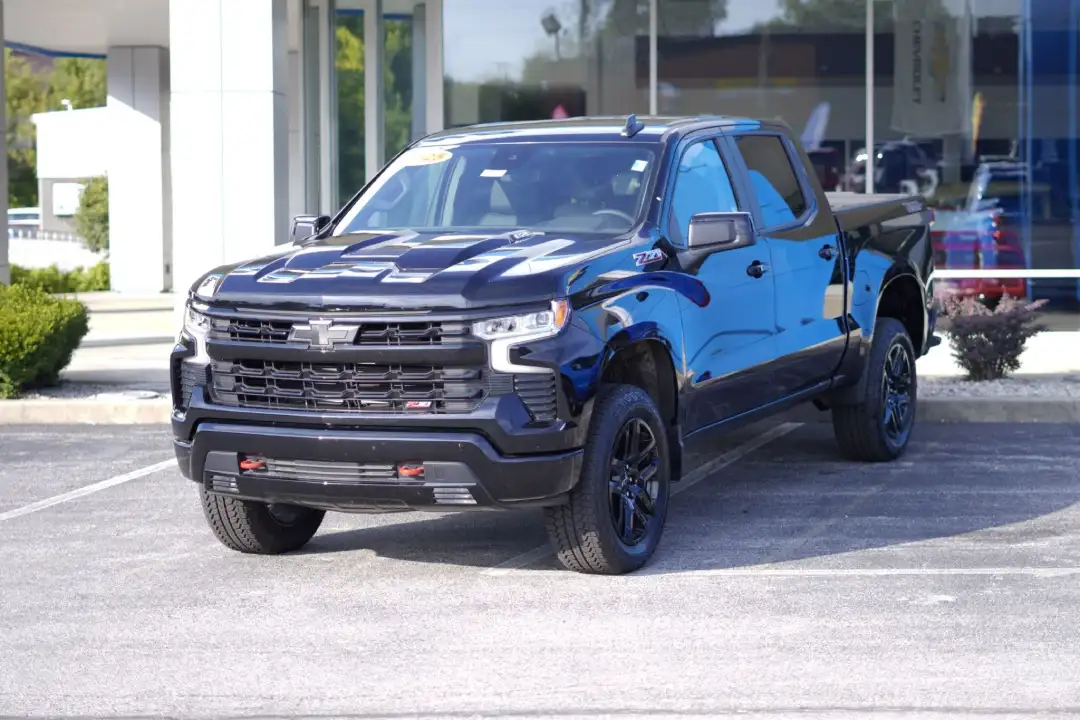
Which One Do You Actually Need?
The 1500 is the right choice for the large majority of buyers, including most people who tow occasionally, whether that is a boat, a small camper, or a utility trailer. It rides better unloaded, costs less to fuel, and offers more engine choices tuned around everyday use.
The 2500HD makes sense once your needs consistently exceed what the 1500 comfortably handles: regular heavy payload, large trailers, livestock hauling, or equipment that demands the added durability of a heavy-duty frame. If you are only an occasional heavy tower, a well-equipped 1500 may actually serve you better day to day than a 2500HD you rarely load to its potential.
What About the 3500HD? A Quick Note
The 3500HD sits above the 2500HD and is built for buyers whose needs exceed even what the 2500HD offers, typically through dual rear wheel configurations that add stability and capacity for the heaviest trailers and payloads. It is a smaller step up from the 2500HD than the 2500HD is from the 1500, and most buyers who think they need a 3500HD are better served figuring out their actual towing and payload numbers first rather than assuming bigger always means better.
Pro Tips
Write down your actual towing and payload numbers before comparing trucks.
Guessing at what you need leads to overbuying or underbuying. A specific trailer weight and a rough estimate of typical cargo weight will tell you more than any spec sheet comparison.
Do not assume the 2500HD’s higher GVWR means it always tows more than the 1500.
A properly equipped 1500 can match or come close to some 2500HD gas configurations on paper. Payload and sustained capability under load are where the real separation happens.
Test drive both trucks unloaded before deciding.
The ride quality difference is real and personal. What feels acceptably firm to one driver feels uncomfortably stiff to another, and that is worth experiencing directly rather than assuming from specs.
Ask specifically about real-world fuel economy on the 2500HD rather than relying on quoted numbers alone.
Since there is no official EPA rating, owner-reported figures vary based on engine, load, and driving style, and our team can walk you through what similar customers typically see.
Additional Questions
What is the actual difference between the Silverado 2500 and 2500HD?
None. Chevrolet’s official name is Silverado 2500HD, and “Silverado 2500” is simply shorthand people use for the same truck.
Which is better, the Silverado 1500 or 2500?
Neither is universally better. The 1500 suits the majority of daily drivers and occasional towers, while the 2500HD suits buyers with regular heavy payload or towing needs beyond what the 1500 comfortably handles.
What is the towing capacity difference between the Silverado 1500 and 2500?
The 1500 tows up to 13,300 pounds properly equipped. The 2500HD’s gas engine tows less than that in most configurations, while the Duramax diesel with the Max Trailering Package can exceed 20,000 pounds with a gooseneck or fifth-wheel setup.
How do the dimensions compare between the Silverado 1500 and 2500HD?
Width is nearly identical at roughly 81 inches for both. Length and weight capacity differ more, with the 2500HD running longer and carrying a GVWR roughly 3,000 to 4,500 pounds higher than the 1500.
Should I consider the Silverado 3500HD instead of the 2500HD?
Only if your towing or payload needs genuinely exceed what the 2500HD offers. Most buyers considering a 3500HD are better served confirming their actual numbers first, since the jump from 2500HD to 3500HD is a bigger capability step than most daily use requires.
Talk to Barry’s About Choosing the Right Silverado
Barry’s Chevrolet is a family-owned dealership in West Union, Ohio. Whether you are leaning toward a 1500 or a 2500HD, our team will walk you through the real tradeoffs based on how you actually use a truck, not just what looks impressive on a spec sheet.
Talk to Barry’s Chevrolet
Give us a call at (866) 601-5443 or visit us on the lot in West Union, OH.

0 comment(s) so far on Silverado 1500 vs 2500HD: Which Chevy Truck Do You Really Need