

Trax vs Trailblazer: A Small Comparison
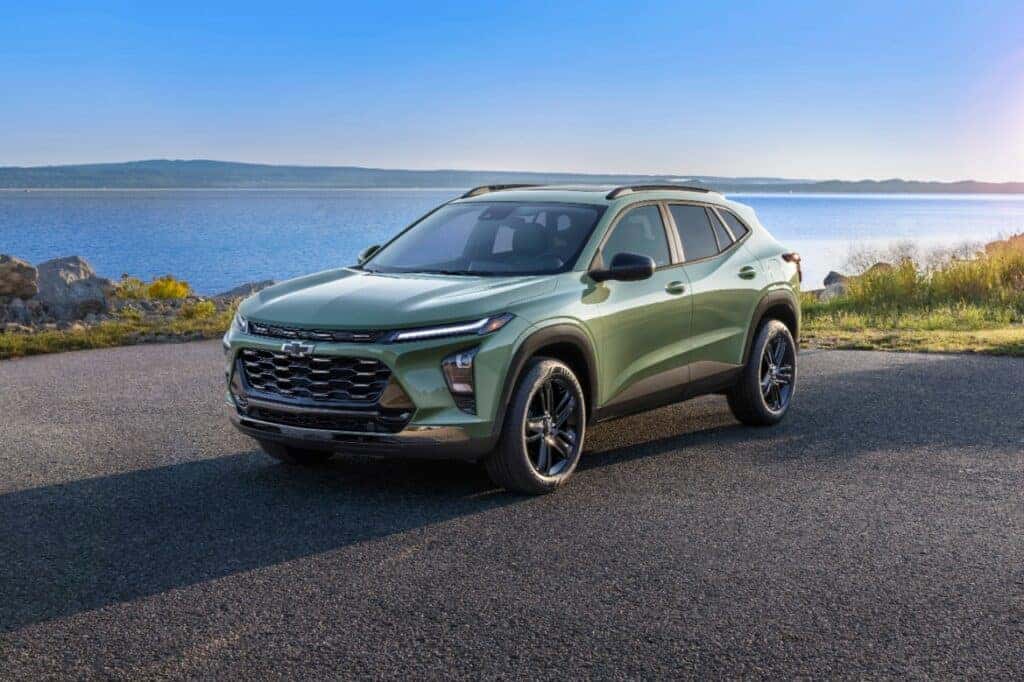
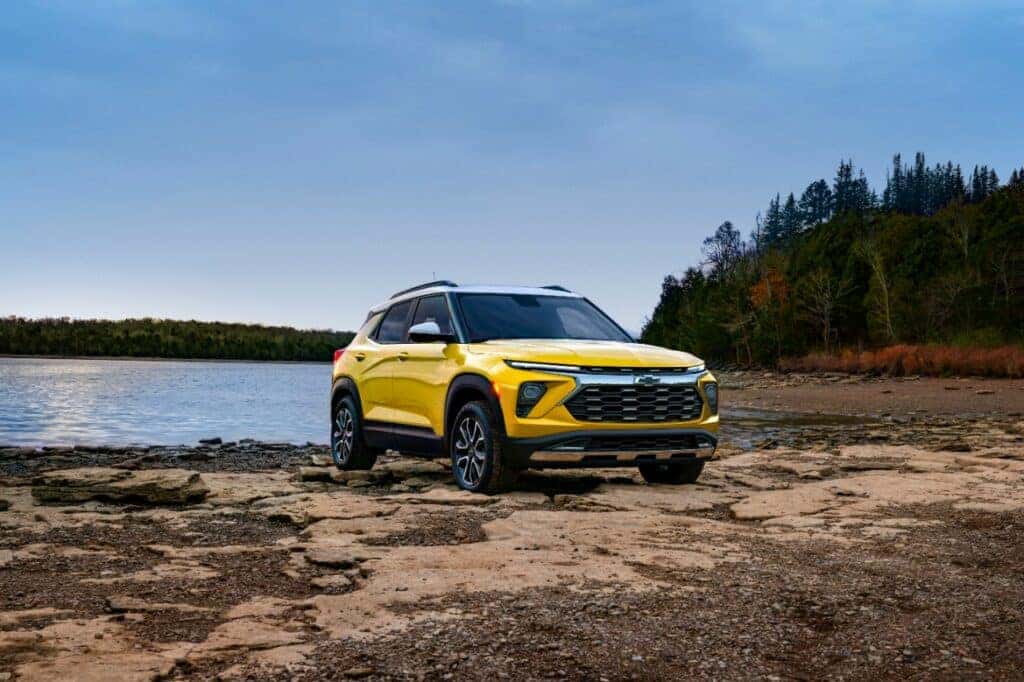
Chevrolet currently has eight crossover/SUV models, not including EVs. While choice is always welcome, similarly sized models can create confusion about the right choice for you. For Chevrolet, this is evident at the small end of the crossover spectrum, where the Trax and Trailblazer seem to occupy the same subcompact category. This Barry’s Chevrolet post addresses the difference between these two subcompact crossovers and which is best for you?
Differences in a Nutshell
There are three very obvious differences between these two models:
- The Trax is front-wheel drive (FWD) only, while the Trailblazer is available with both FWD and all-wheel drive (AWD).
- They have different styling, particularly in profile.
- The Trax is less expensive, with a base MSRP of $21,495, compared to the Trailblazer’s $23,395 starting MSRP.
Size Similarities
Despite the Trax’s two-inch longer wheelbase and overall length and width, the interior space of the two models is very similar. The Trax is a bit larger, with 99.8 cubic feet of passenger volume compared to 98.2 for the Trailblazer, but when it comes to specific measurements, there are few significant differences. The Trailblazer has slightly more headroom without the sunroof and slightly less with one. Most of the other passenger specs are fractions of an inch apart, except that the Trailblazer has one more inch of rear legroom and a surprising five more inches of rear hip room.
Both vehicles can seat three in the rear seat, though anyone above grade school probably won’t want to be in the rear-center seat for long. Cargo space with the rear seatbacks up and down is also too close to make any real difference. Another minimal difference is ground clearance, which is 7.3 inches for the Trax and 7.5 inches for the Trailblazer, including AWD models.
Drivetrain Choices
Both of these model lines run on turbocharged small-displacement 3-cylinder engines. Found across the Trax model line and the lower-level FWD Trailblazers is a 1.2-liter turbocharged inline-3 rated at 137 horsepower and 162 lb-ft of torque. From there, things diverge with the Trax using a 6-speed automatic transmission while the Trailblazer uses a continuously variable transmission (CVT). The mileage is similar but not identical, with the Trax having an EPA city/highway/combined rating of 28/32/30. The FWD Trailblazer LS and LT models with this same engine have the same combined 30 mpg rating, but the city figure is up by one at 29 mpg and down by one on the highway at 31.
Standard on the FWD Trailblazer ACTIV and RS trims and all AWD models is a larger 1.3-liter turbocharged inline-3 with power raised to 155 hp @ 5600 rpm and 174 lb-ft torque @ 1600 rpm. This engine is paired with a 9-speed transmission. Fuel economy for the FWD models with the larger engine actually increases a small step to 29/33/31. AWD, however, brings it down to 26/29/27.
Design Differences
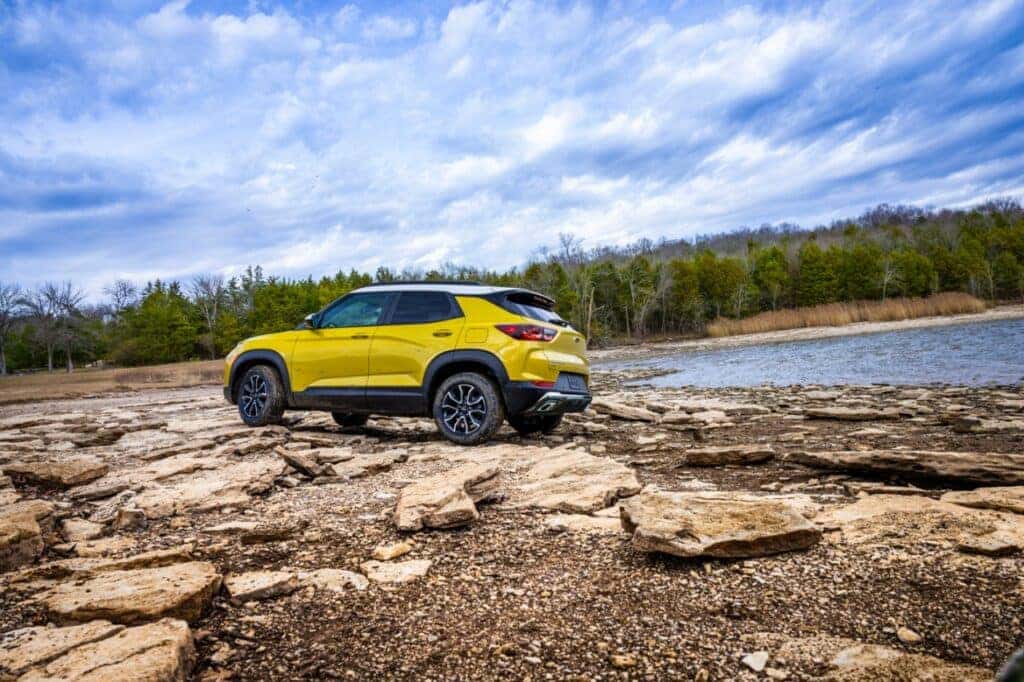
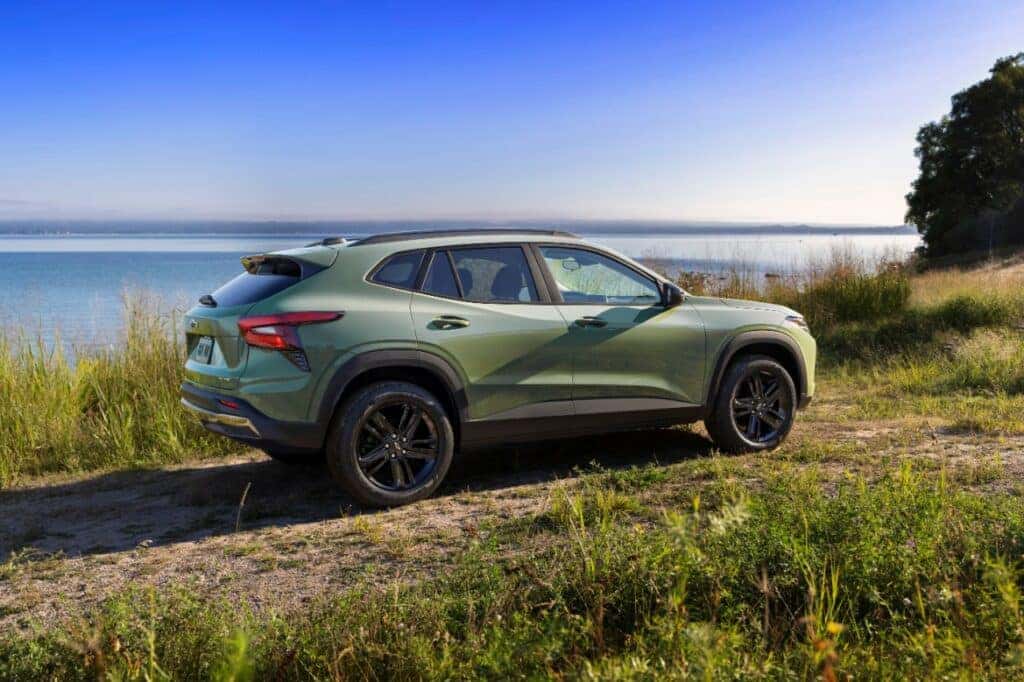
Both models have their own version of the Chevrolet crossover front end with a deep lower grill, an upper grille just tall enough to match the slit-like daytime running lights on either side, and LED headlights tucked into the corners. It is the profiles, however, where these models diverge. The longer Trax appears even more so with a classic wagon shape with a long stretch of side windows, including a quarter window behind the rear door until you get to the D-pillar. The Trailblazer’s side windows stop at the rear door, followed by a sizable C-pillar for a more sport-hatchback shape. A jaunty white roof is available on the Trailblazer, while all Trax models have a monochromatic exterior.
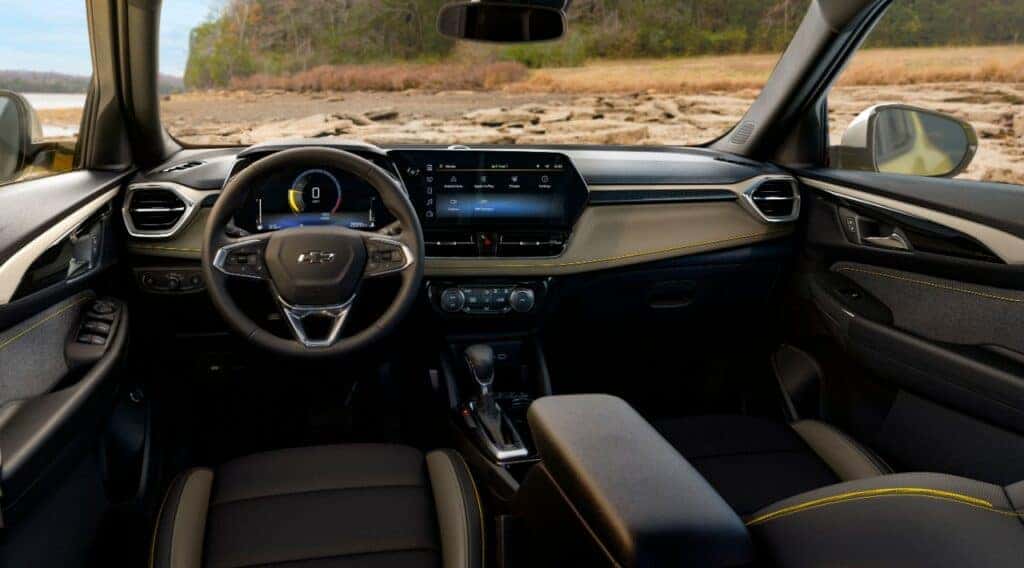
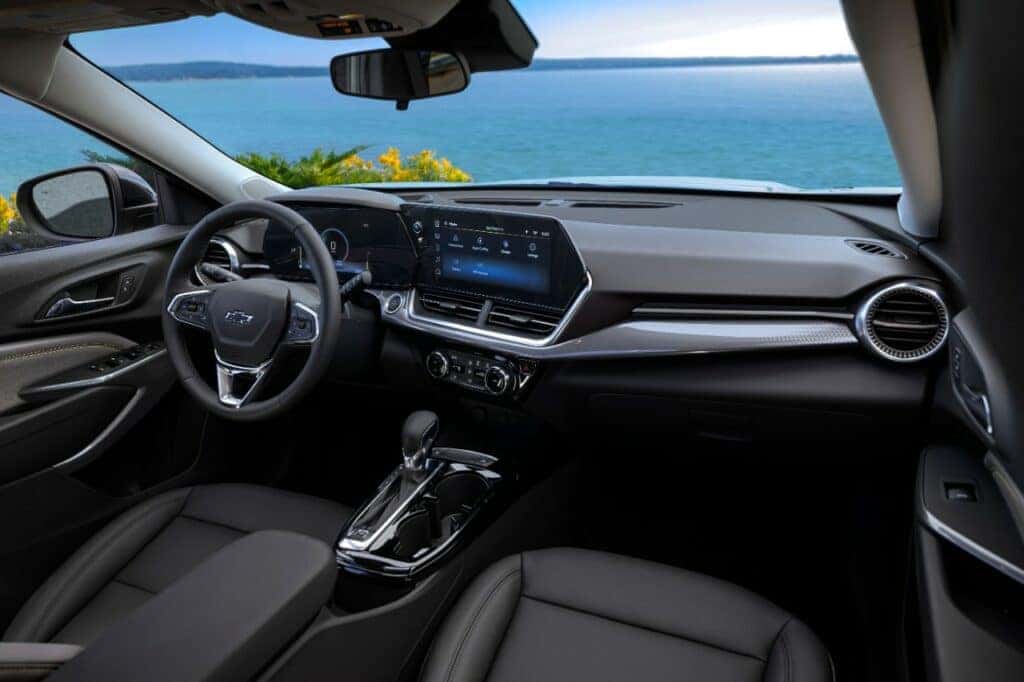
The dash layouts for the two models feature identical control layouts but differing shapes around the rest of the cabin. The Trax has an 8-inch center touch screen on the lower two trims as well as analog gauges for the driver. On the upper three trim levels, the center screen grows to 11 inches, and the driver gets an all-digital information center. All Trailblazers come standard with an 11-inch screen and digital driver’s display. Both models have standard wireless smartphone compatibility and available wireless charging.
Value
For the price of the base FWD Trailblazer, you can bump up two levels on the Trax to the LT, which matches the base Trailblazer’s large center touchscreen, digital driver’s display, and automatic climate control. It also offers upgraded audio and seat cloth. Again, AWD is unavailable on the Trax and costs about $2,000 more on the Trailblazer, which is available on every trim and includes the larger engine.
The Trax is Chevrolet’s least expensive model line. With its FWD-only platform, it could be considered more of a small car with the versatility of a wagon shape—not that there’s anything wrong with that. It makes a pretty good lower-cost case against an FWD Trailblazer. Of course, the comparison is moot if you wish for the wet weather and off-pavement traction advantages of AWD.
Each model provides economical but versatile transportation in its own style, and you are the judge of which style works best for you. So check out both the Trax and Trailblazer at Barry’s Chevrolet and see which works for you.

0 comment(s) so far on Trax vs Trailblazer: A Small Comparison