

Proper Ways to Strap a Truck to a Trailer
When you want a pickup truck or SUV, one of the first things you want to know is how well it tows a trailer. While you can read all of the stats on a vehicle, it doesn’t quite tell you how well the vehicle copes with a load on a flatbed trailer.
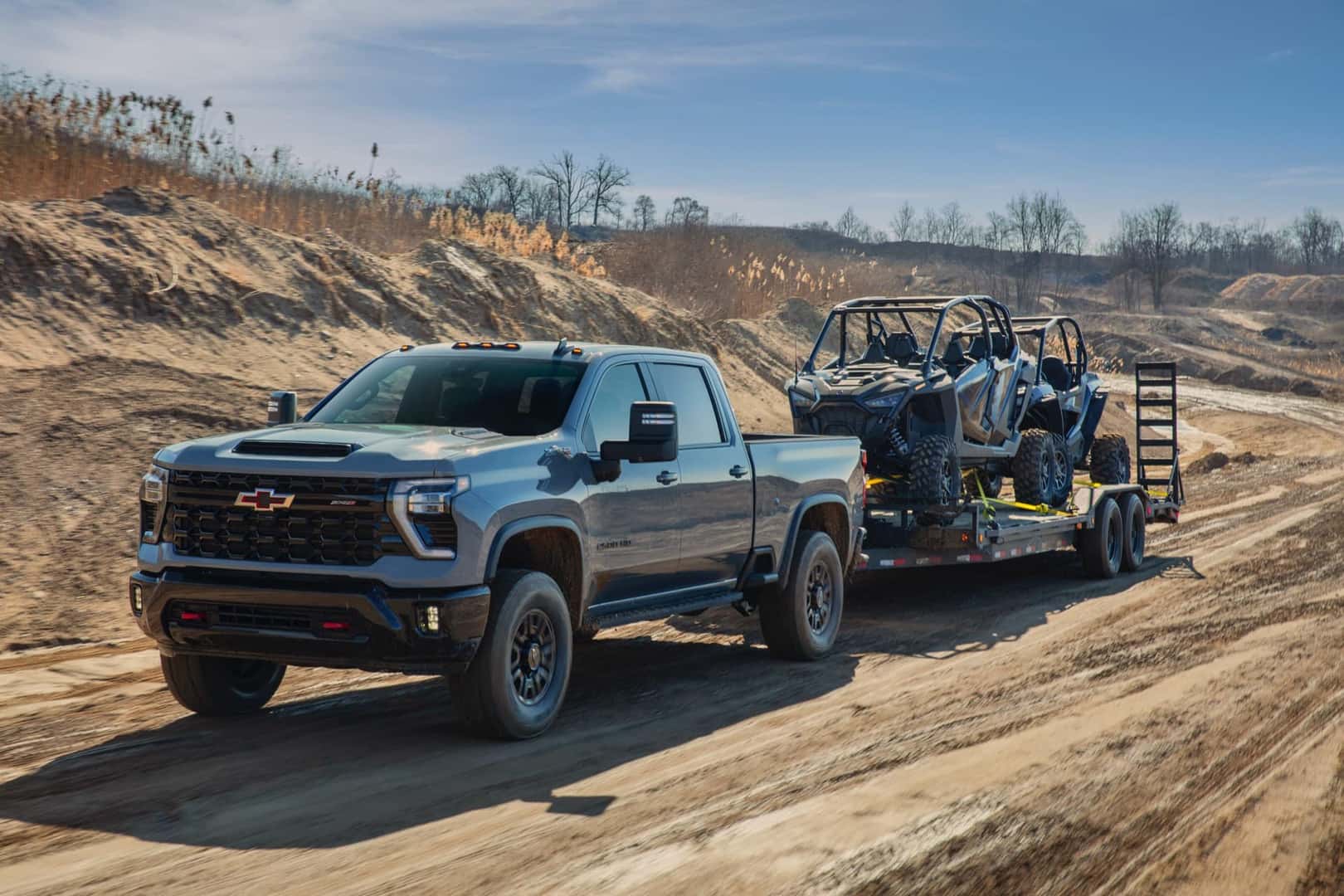
One of the most critical aspects of the towing experience involves securing your previous cargo. Whether it is a classic car, building materials, or your trip to the recycling center, your cargo should be secured while being towed to its intended destination.
MotorTrend has some ideas on how to secure your load onto a trailer. They based their tips on their experience with trailering a lifted full-size pickup truck with large off-road tires. While that is a substantial load to carry, the same techniques can be applied to many flat trailer loads, including farm implements.
If you have a flatbed trailer, make sure it has the right load rating for the cargo you’re going to carry, as well as meeting the tow rating of your vehicle. It is safe to say that a Chevrolet Silverado HD will be more than adequate for most flatbed trailers. Farm implements and heavier loads would work best with the 3500HD model. You could tow a car or your ATVs with your Silverado 1500, Tahoe, or Suburban. Lighter loads would be fine with a Colorado.
The straps are the most important piece of equipment you will use when flatbed trailering. Make sure that they can accommodate a load of at least 10,000 pounds with each strap. There should be four of them in a pack, and MotorTrend suggests using all of them.
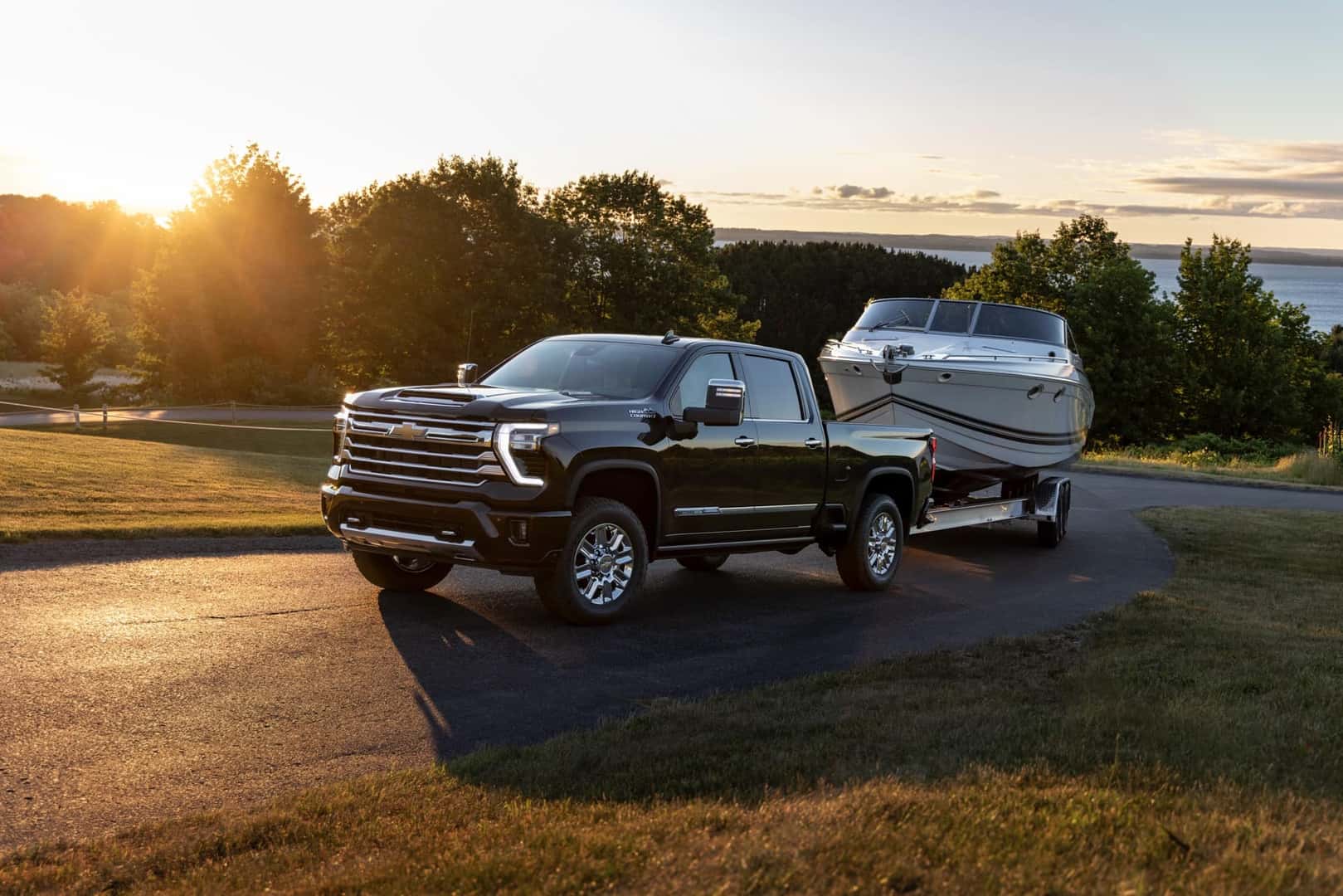
If you are towing something, such as a four-wheel drive truck, MotorTrend suggests you put the vehicle into “low range, hubs locked (if you have hubs), either in gear or park, and set the parking brake.” This is a good setup for any vehicle you are towing.
The next step is to secure the load with the straps. MotorTrend suggests tying your vehicle down “by the axle tube, the lower A-arm, or a lower suspension link, but the best bet is throwing an axle strap around the axle tube. Put the straps over smooth metal. Attaching the straps to the frame or to bumper recovery points is not a good idea because the 4×4’s suspension can compress and rebound as the trailer goes down the road, in effect loosening the straps. This can shorten the life of the straps, break the straps, or cause them to come unhooked if they do not have hook enclosures.”
Should you cross-strap your load or strap it straight across? For their pickup truck, MotorTrend suggests to “run the front’s straight and the rears crossed. If you run them crossed and one strap fails or comes loose, the vehicle will have a tendency to move sideways. If the straps are all straight and you lose a strap, the other three will still work to hold the vehicle in place.”
They also said that “when routing the axle straps around your axle tubes, watch for brake lines and speed sensor wires. It’s better to run under these than over, as they can get pinched or broken. It is even possible to route your axle strap through the lower portion of your steering C as a tie-down point.”
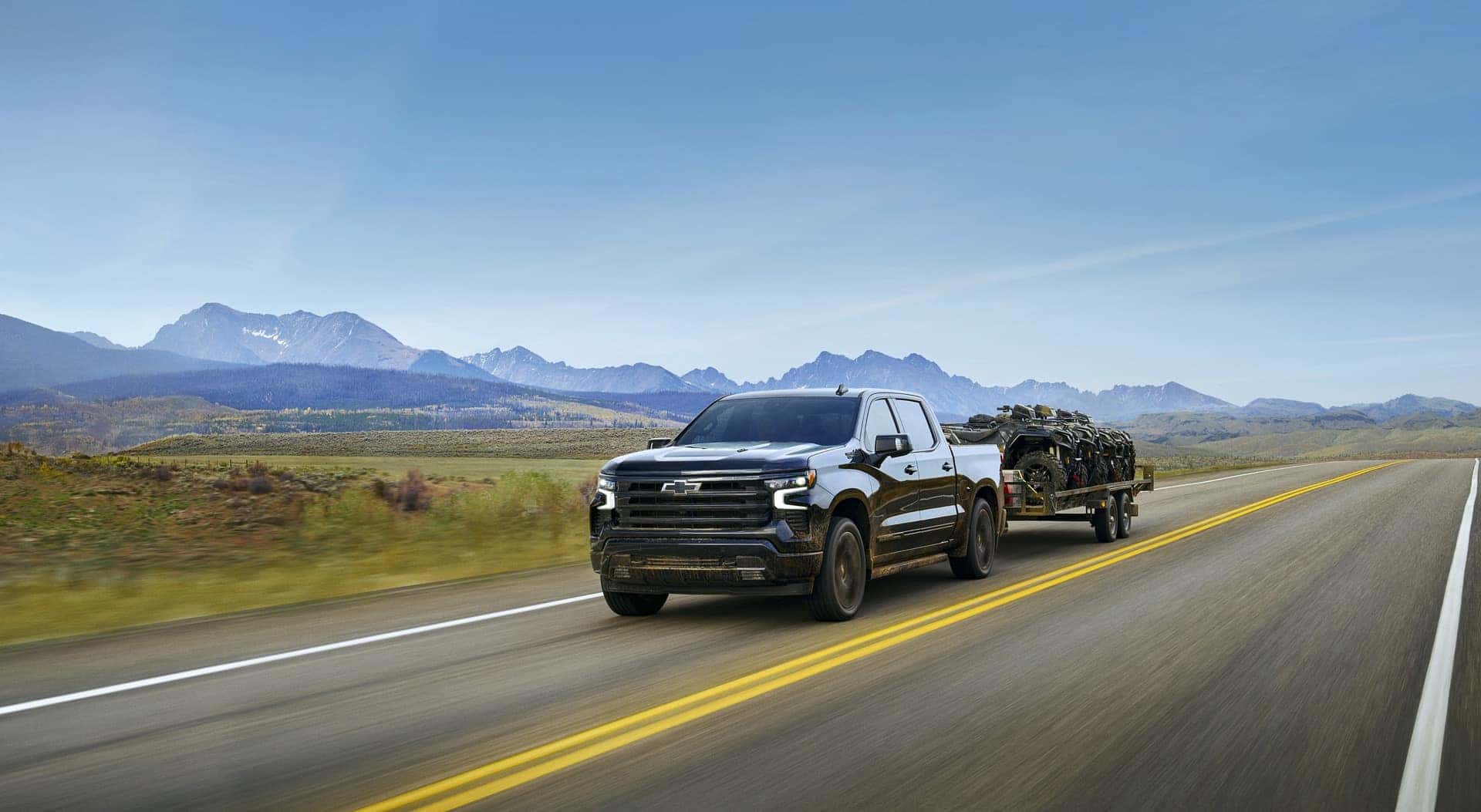
“When tightening up your ratchet strap, give it about two or three wraps on the ratchet drum before you get it tight. This added friction around the drum helps retain the tightening, where a single wrap can work loose.”
Overall, MotorTrend encourages us to “do your part. Tow safe, strap down well, stop and check those straps regularly, and have fun.”
If you are looking for a great tow rig to transport your classic car, farm implement, or anything on a flatbed trailer, contact us at Barry’s Chevrolet, and we can show you which vehicles can do the job with ease.

0 comment(s) so far on Proper Ways to Strap a Truck to a Trailer