

The Difference Between Half-Ton and Heavy Duty Pickup Trucks
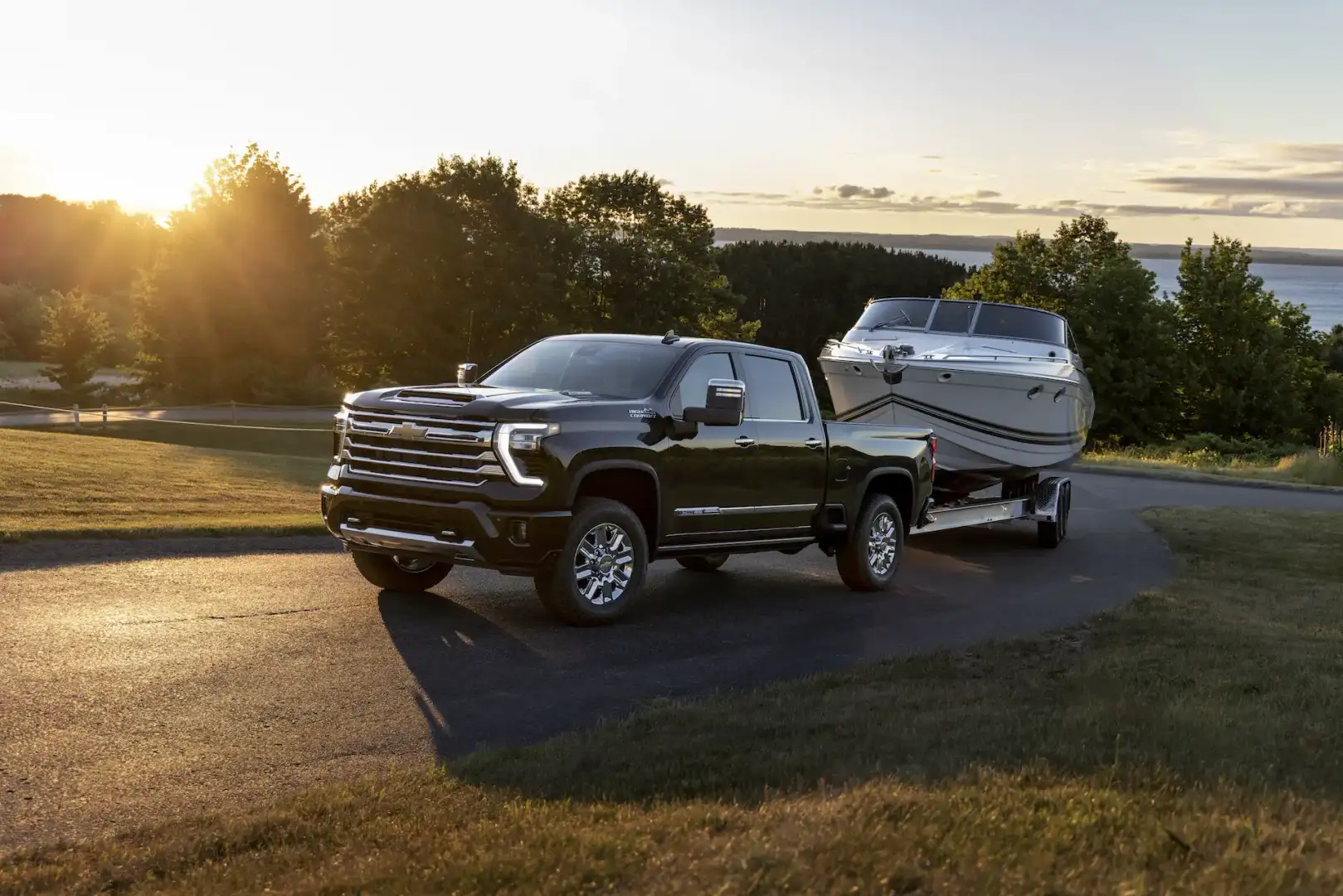
Being a full-size half-ton pickup truck owner is similar to being a boat owner in one respect. Not too long after you have your truck, or the first time you encounter a limitation, you start thinking about getting a bigger truck. Going bigger brings a level of commitment that many eventually decide to forego. Consequently, half-ton trucks vastly outsell ¾-ton or larger trucks. While you can make a half-ton truck look pretty tough with larger tires, a lift kit, and other accessories, you can’t upgrade a half-ton truck to a three-quarter-ton truck, no matter what you add to it. Barry’s Chevrolet discusses the differences between half-ton and heavy-duty trucks.
Chevrolet and the other domestic truck manufacturers use a close, though not identical, nomenclature to identify their truck sizes. Chevrolet, GMC, and Ram all use the suffix “1500” to identify their half-ton trucks, which will be your regular full-size truck. “2500” denotes a heavy-duty truck, and “3500” indicates even more. The latter often, though not always, features dual tires on each side of the rear axle. Ford is similar, except that it lops off the last zero and adds an “F-” in front, so you have F-150, F-250, and F-350, and Ford even stretches as high as F-650 for purely commercial trucks and chassis.
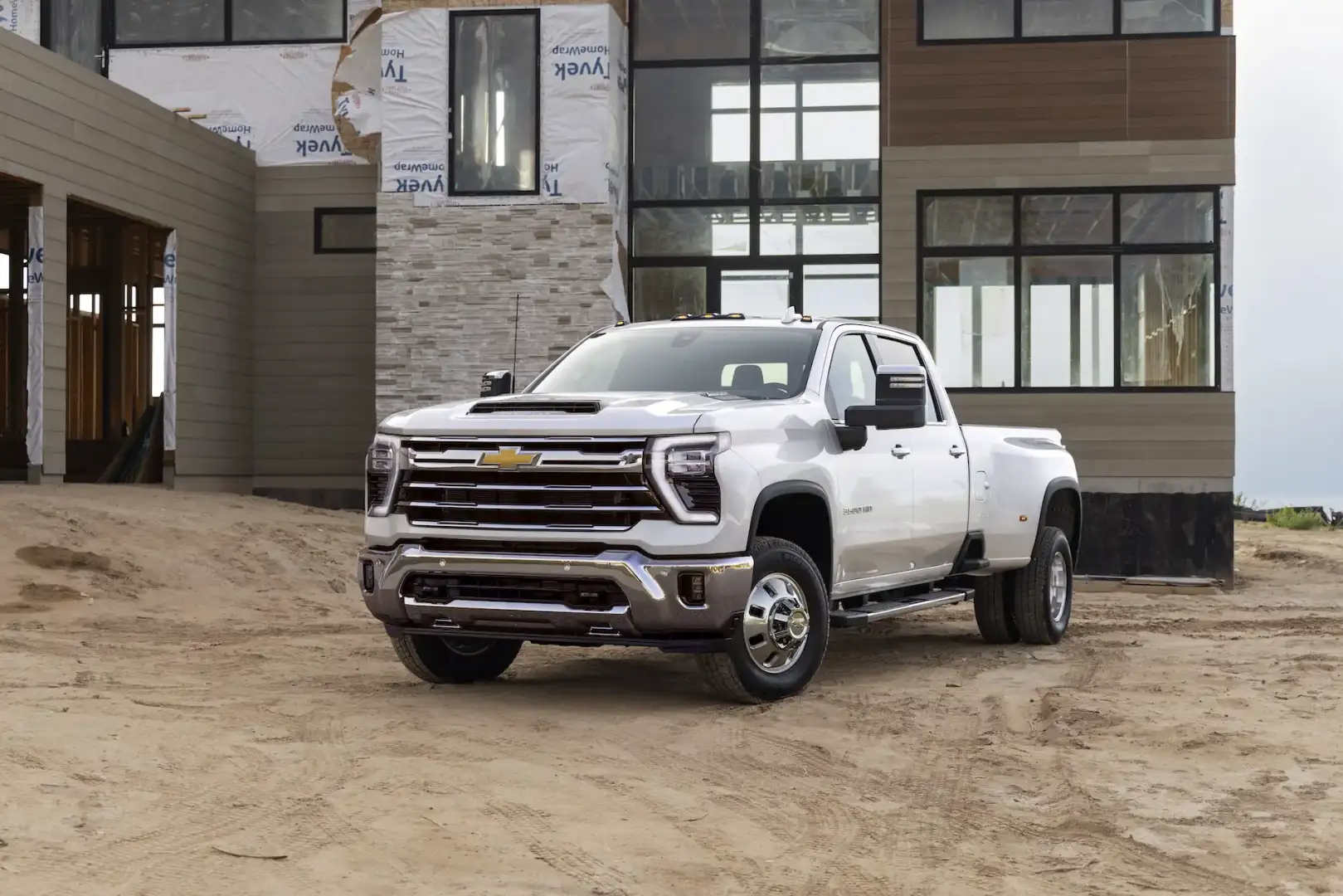
The most significant difference between half-ton and three-quarter-ton trucks is payload and towing capacity. Using the Chevrolet Silverado as an example, the Silverado 1500 can carry up to 2,200 pounds of payload or tow up to 13,300 pounds when properly equipped. By contrast, a Silverado 2500 can carry up to 4,000 pounds and tow up to 20,000 pounds with a hitch, and over 22,000 pounds with a fifth-wheel or gooseneck trailer. The Silverado 3500 takes things a step further, with a maximum payload of 7,442 pounds and a maximum towing capacity of up to 36,000 pounds with a gooseneck or fifth-wheel trailer. Competing trucks from Ford and Ram have similar payload and towing capacity ranges.
It is important to keep in mind that these are the maximum possible figures, as truck configuration, drivetrain, axle ratio, and other factors can all impact both payload and towing capacity. For example, most of the figures above the maximum come from vehicles fitted with diesel engines, more specifically turbo-diesel engines with names like “Duramax” for GM models, “Power Stroke” for Ford, and “Cummins” for Ram.
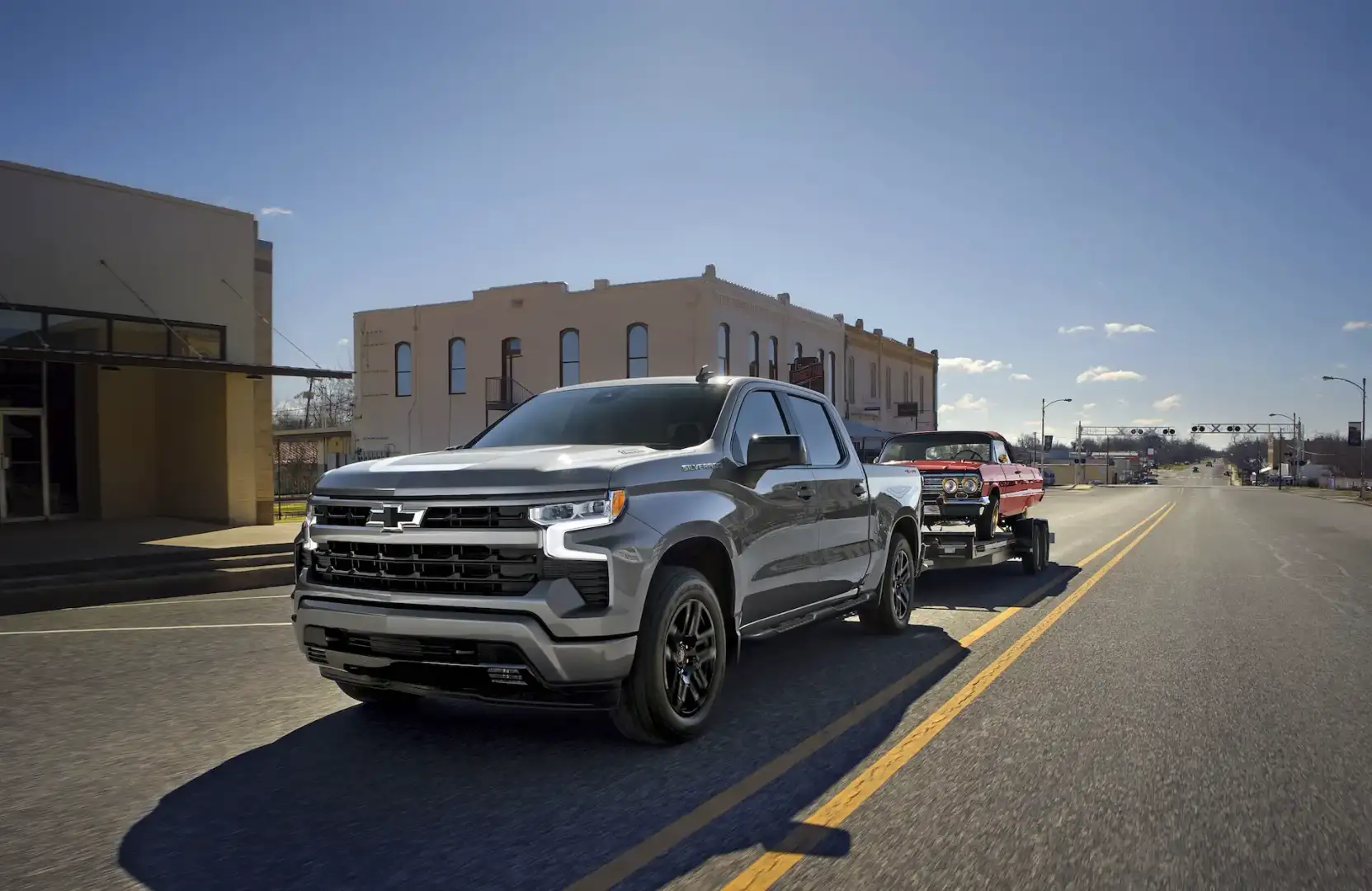
Heavy-duty trucks typically ride higher and are wider than their regular-duty counterparts. However, most differences are not visible. These include stronger, thicker chassis components, such as longitudinal rails and crossmembers, larger brakes, and heavy-duty shocks. This is why you can’t option or upgrade a conventional pickup to heavy-duty status. The difference is in the trucks’ bones. Heavy-duty trucks used to share styling with their half-ton counterparts but have recently started adopting their own front-end styling, particularly on GM and Ford models. Another visible giveaway, besides badging, is the wheels, which feature eight lugs instead of five.
All this adds weight, of course, which is why heavy-duty trucks will have stronger engines in general. In addition to the diesel engine, large-displacement gas V8s will be available, such as the gas-powered 6.6-liter V8 for Chevrolet, as well as the 6.6-liter turbo-diesel V8. Handling the additional weight will also require heavier-duty tires that may not have the quiet or soft-riding attributes of standard truck tires.
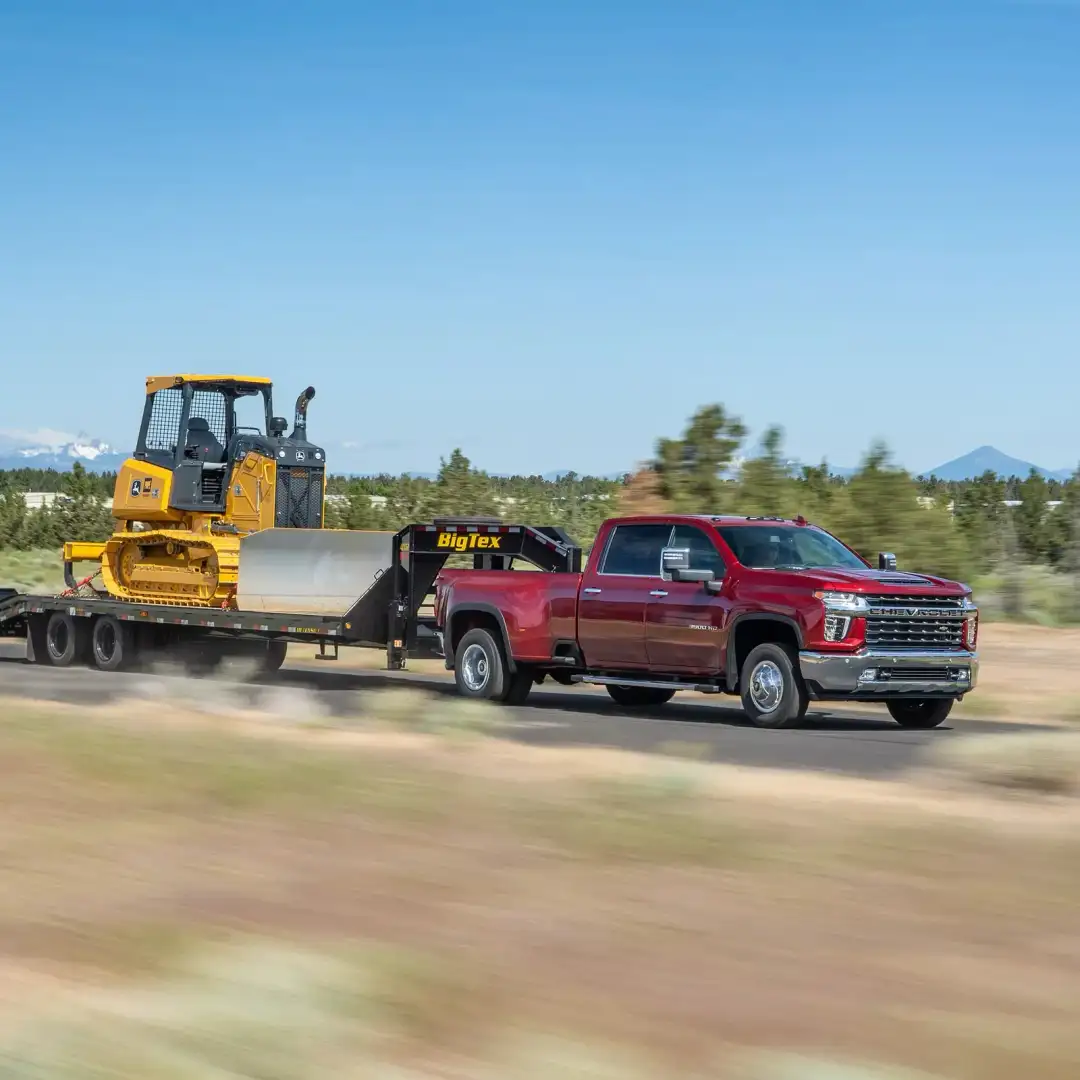
The added weight of the chassis, tire/wheel combo, and larger engines all result in lower fuel economy, a rougher ride, and a higher initial cost, so you probably don’t want a heavy-duty truck unless you know your payload or towing capacity needs will exceed those of a half-ton pickup. But when the need arises, a heavy-duty truck can be worth its weight in gold.
If you think you may need a heavy-duty truck, talk to the sales professionals at Barry’s Chevrolet. Tell them your current and anticipated needs, and they will steer you to the Chevrolet Silverado that is right for you.

0 comment(s) so far on The Difference Between Half-Ton and Heavy Duty Pickup Trucks